
OCD in children and young people
Learn how OCD may present in children and young people and how families can support them.
My courses
Log in to the course portal to view the courses you already have access to.
Go to my coursesOCD guide for children: Hopla and Grumme
A child-friendly guide for children, parents, clinicians, schools and other institutions. The PDF is currently in Danish.
Free resource · Danish PDF
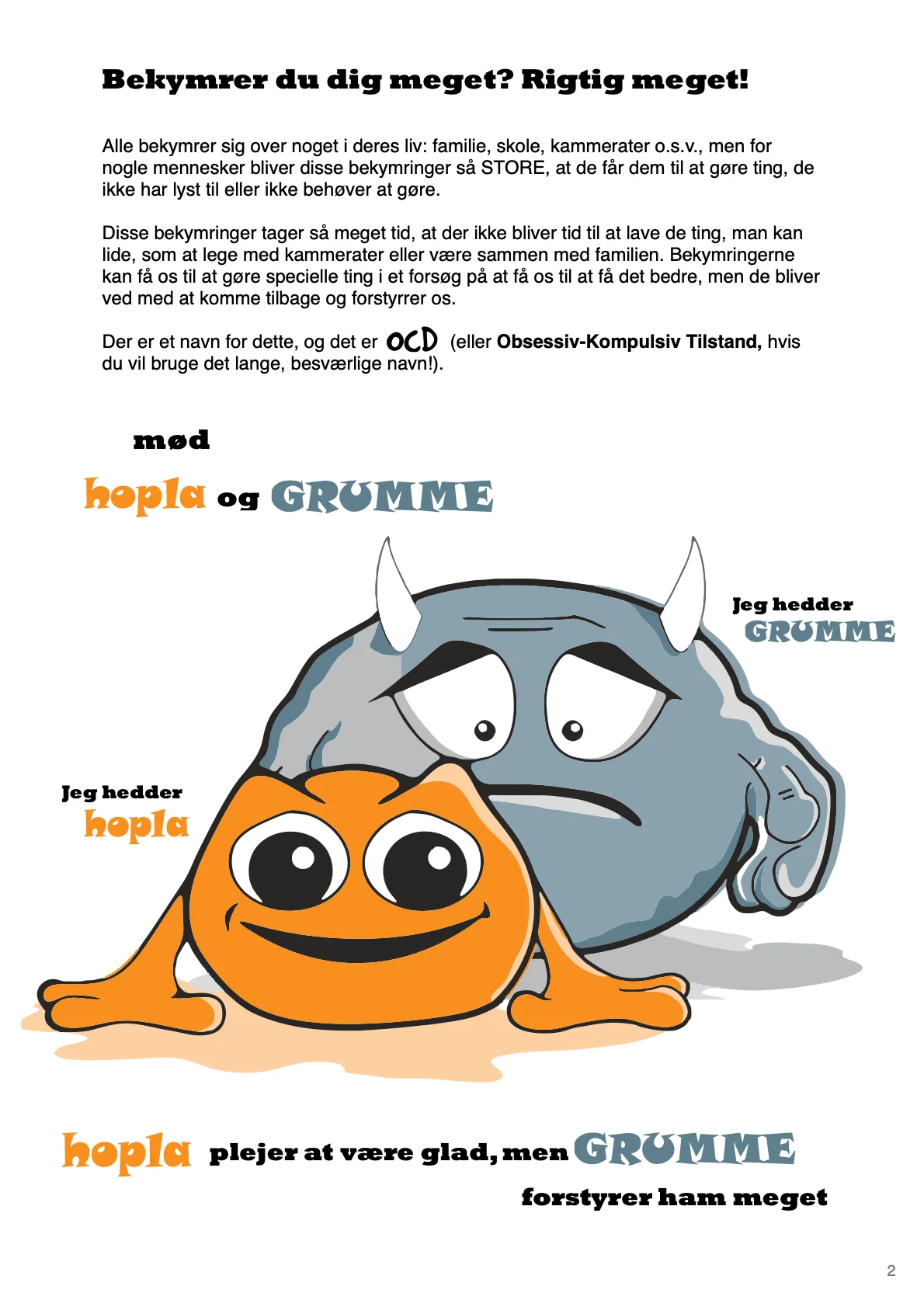
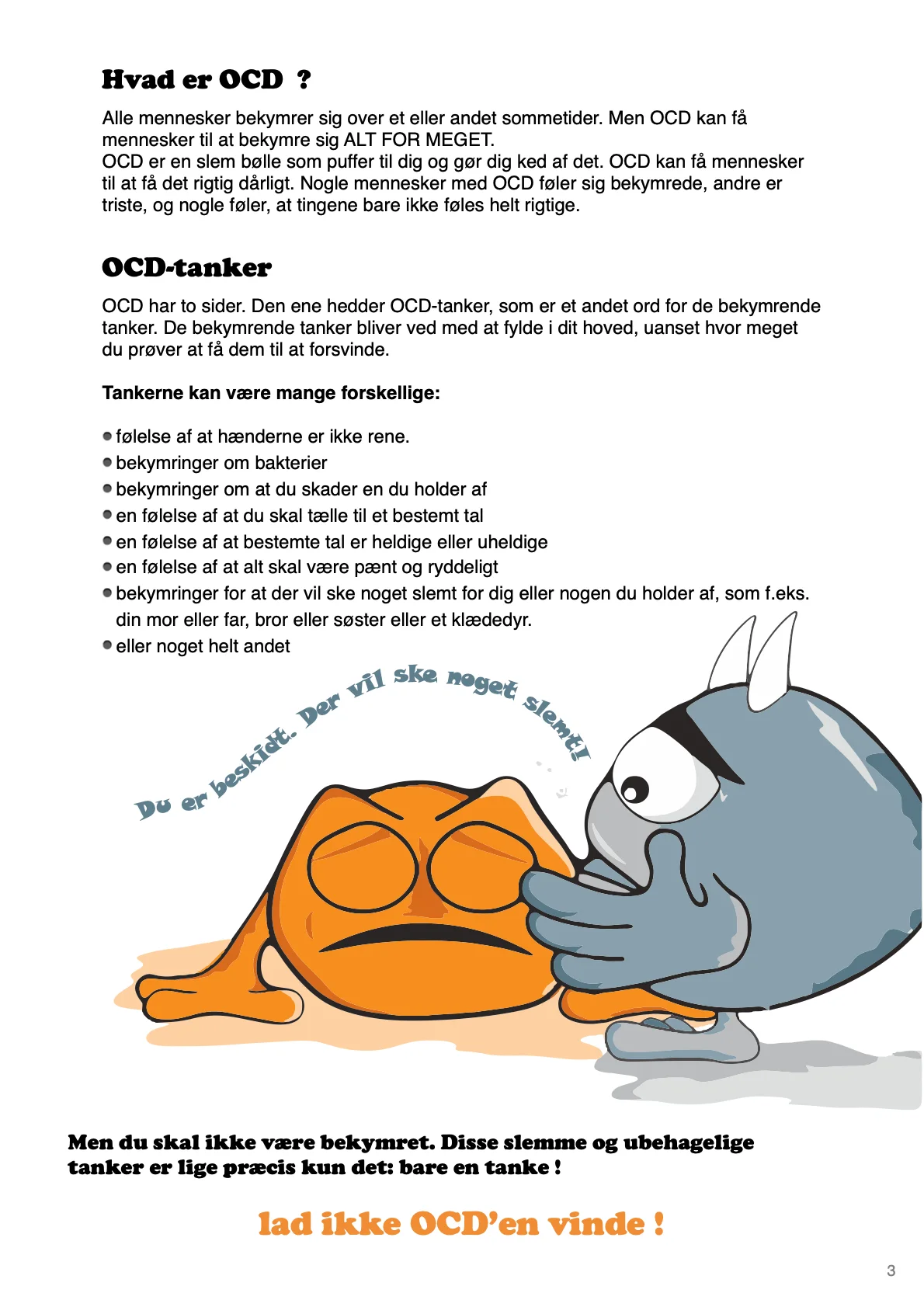
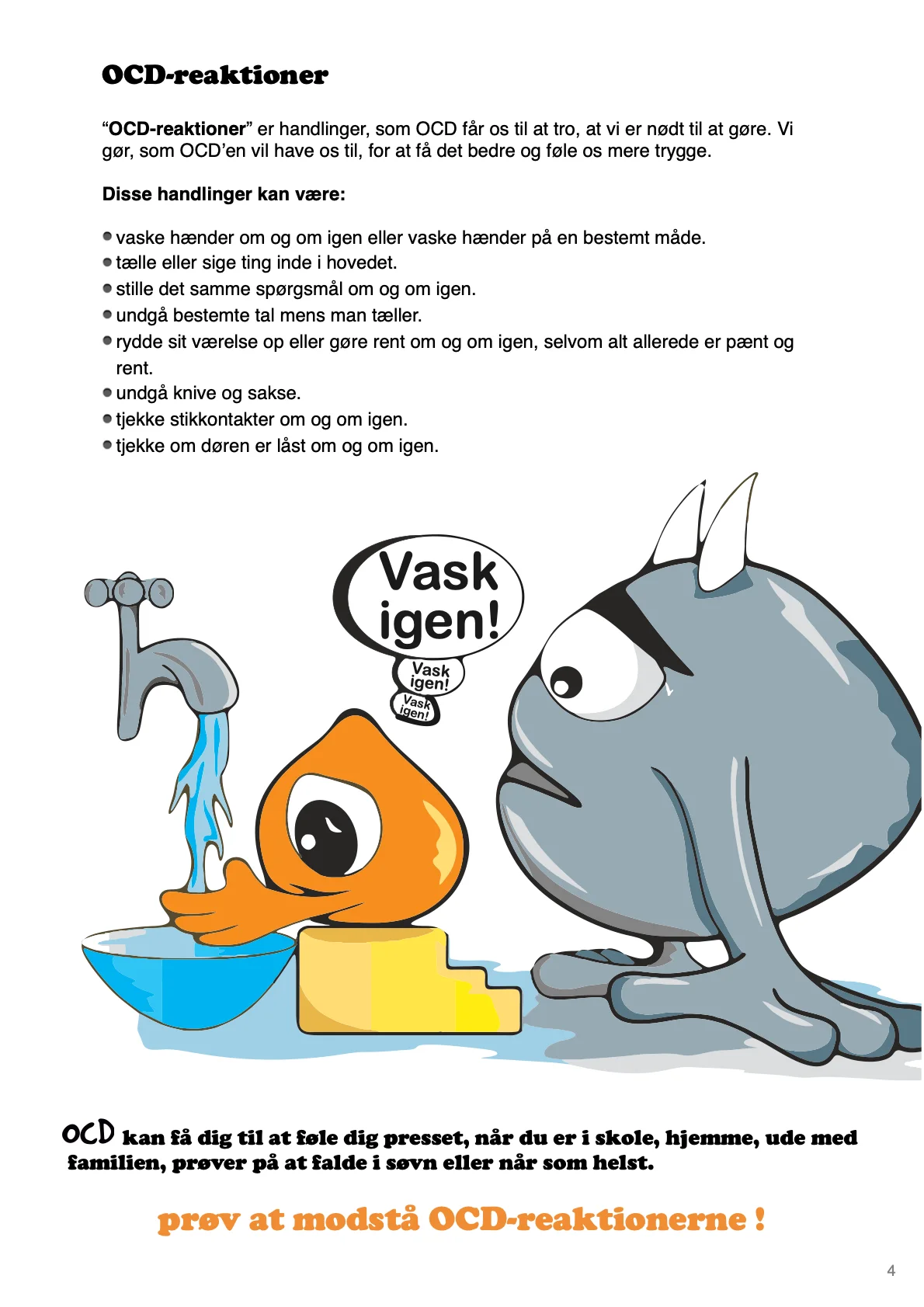
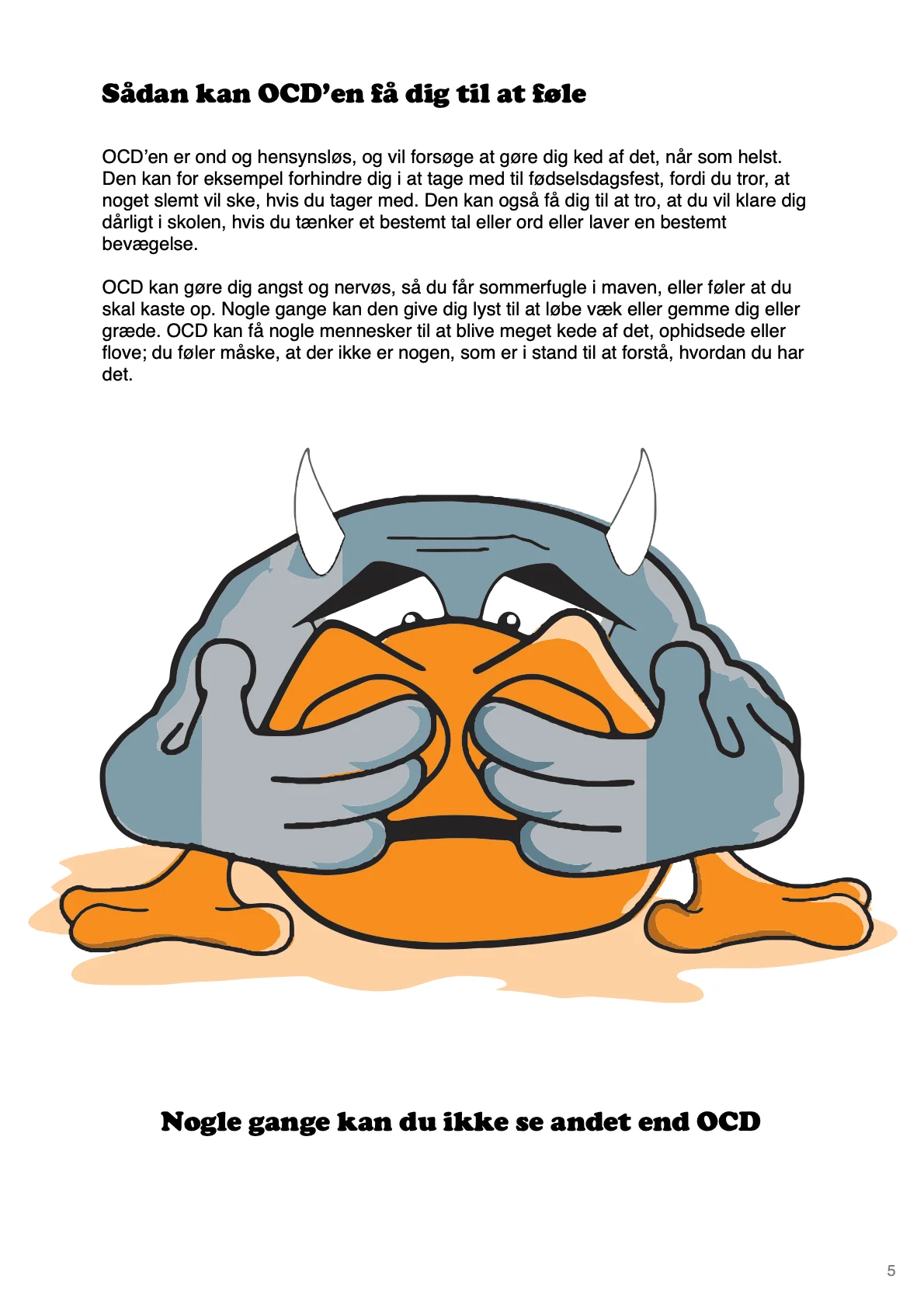
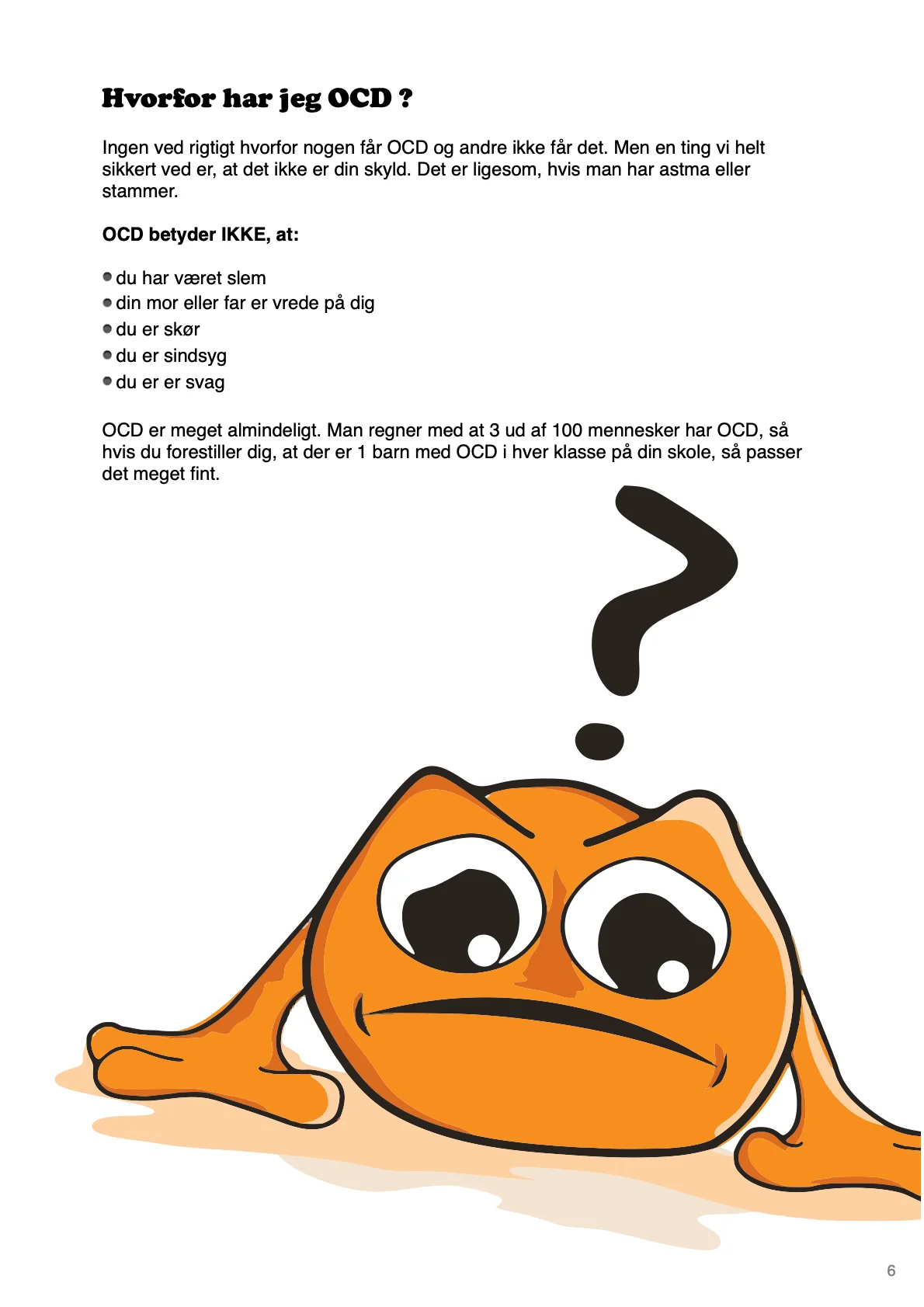
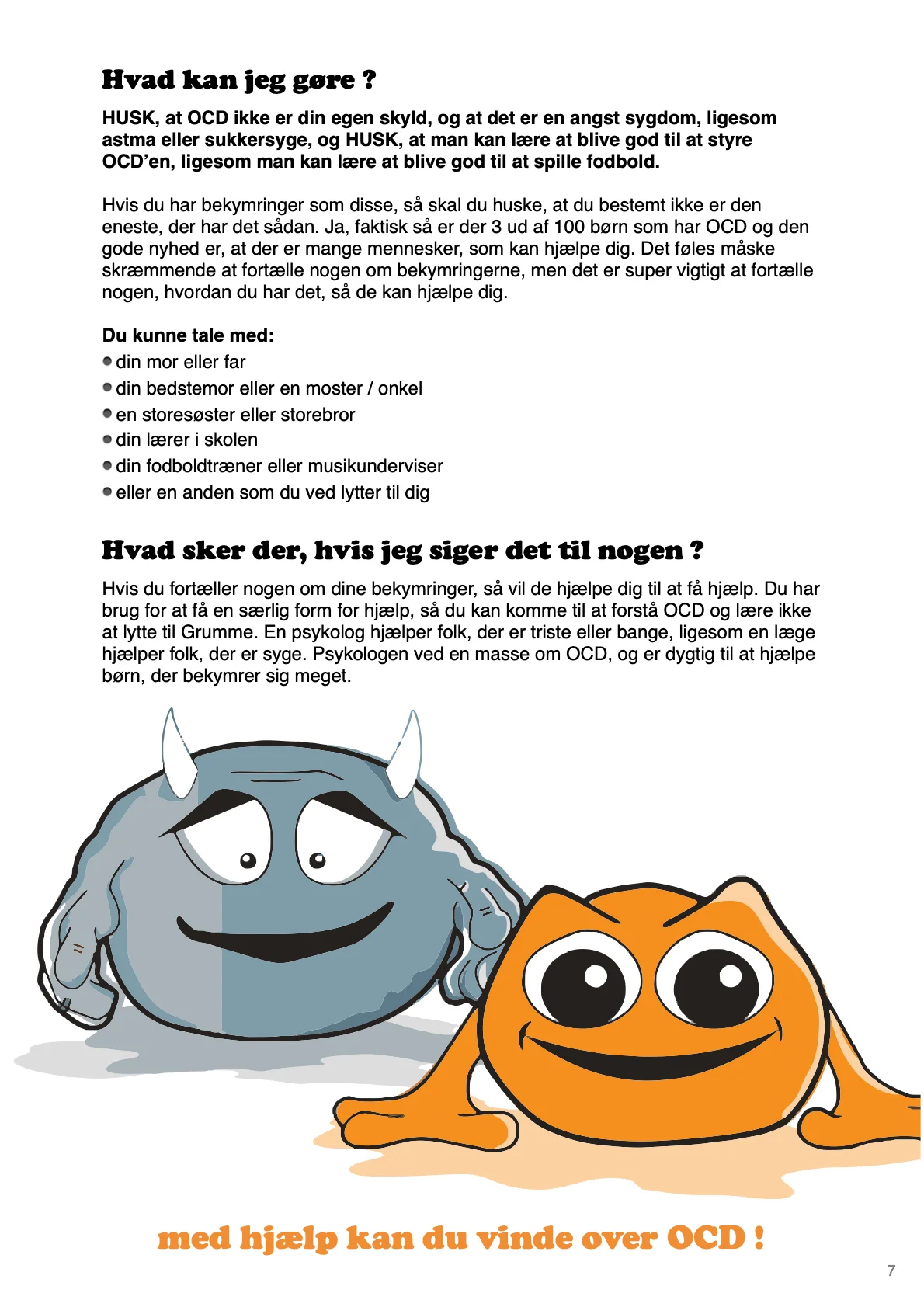
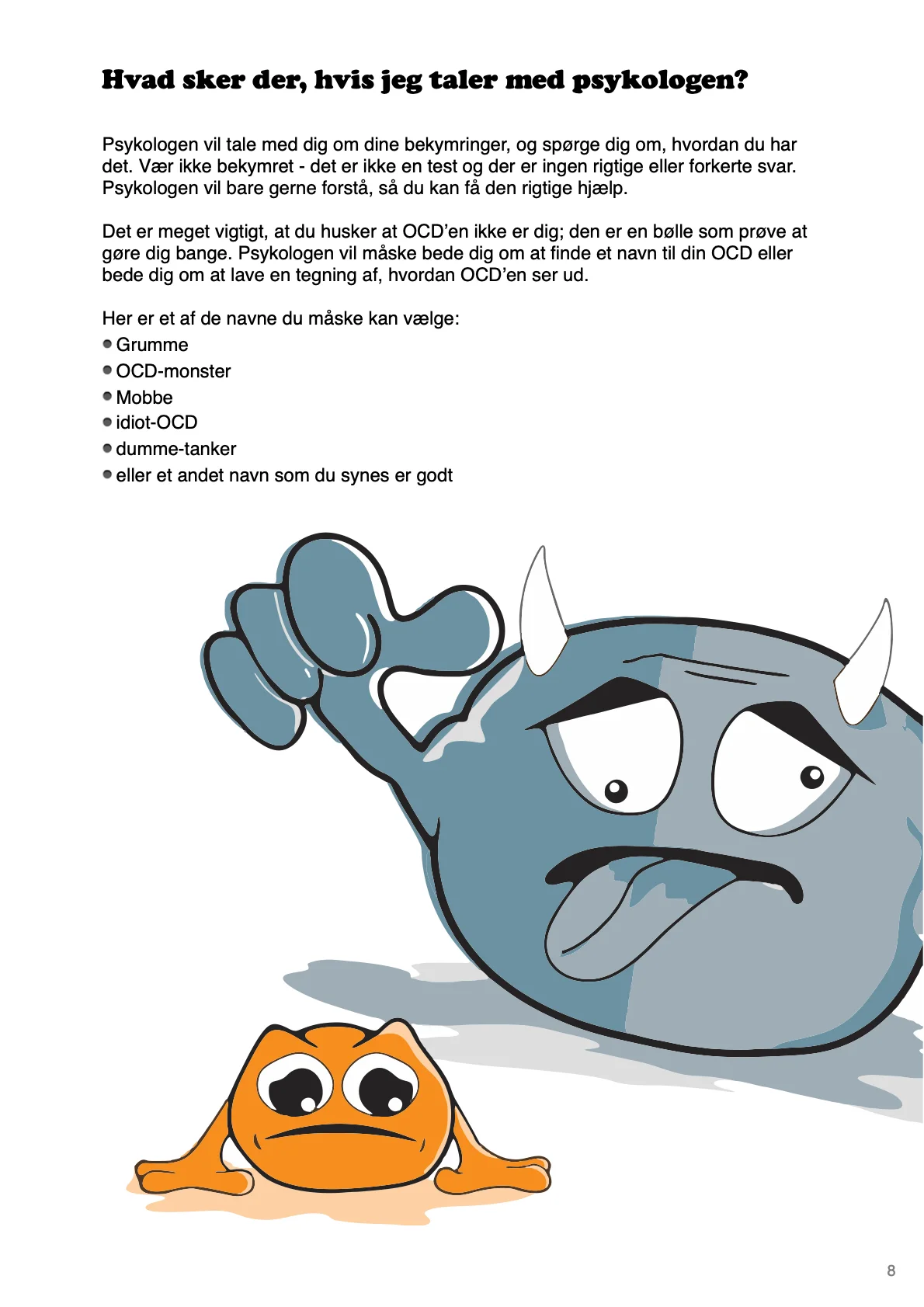
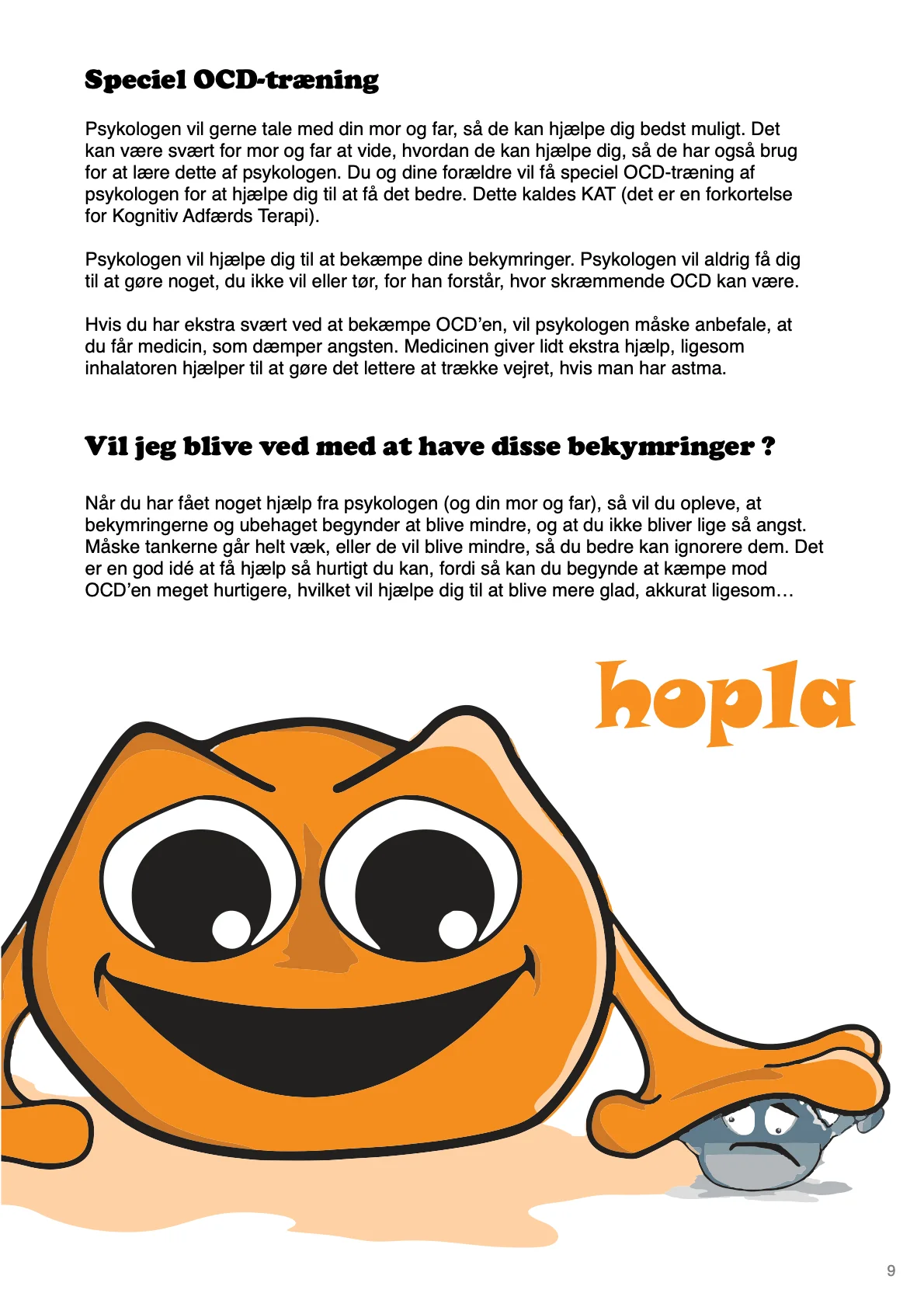
An 11-page, child-friendly guide in which Hopla and Grumme help children and adults develop a shared language for understanding OCD. The downloadable guide is currently available in Danish.
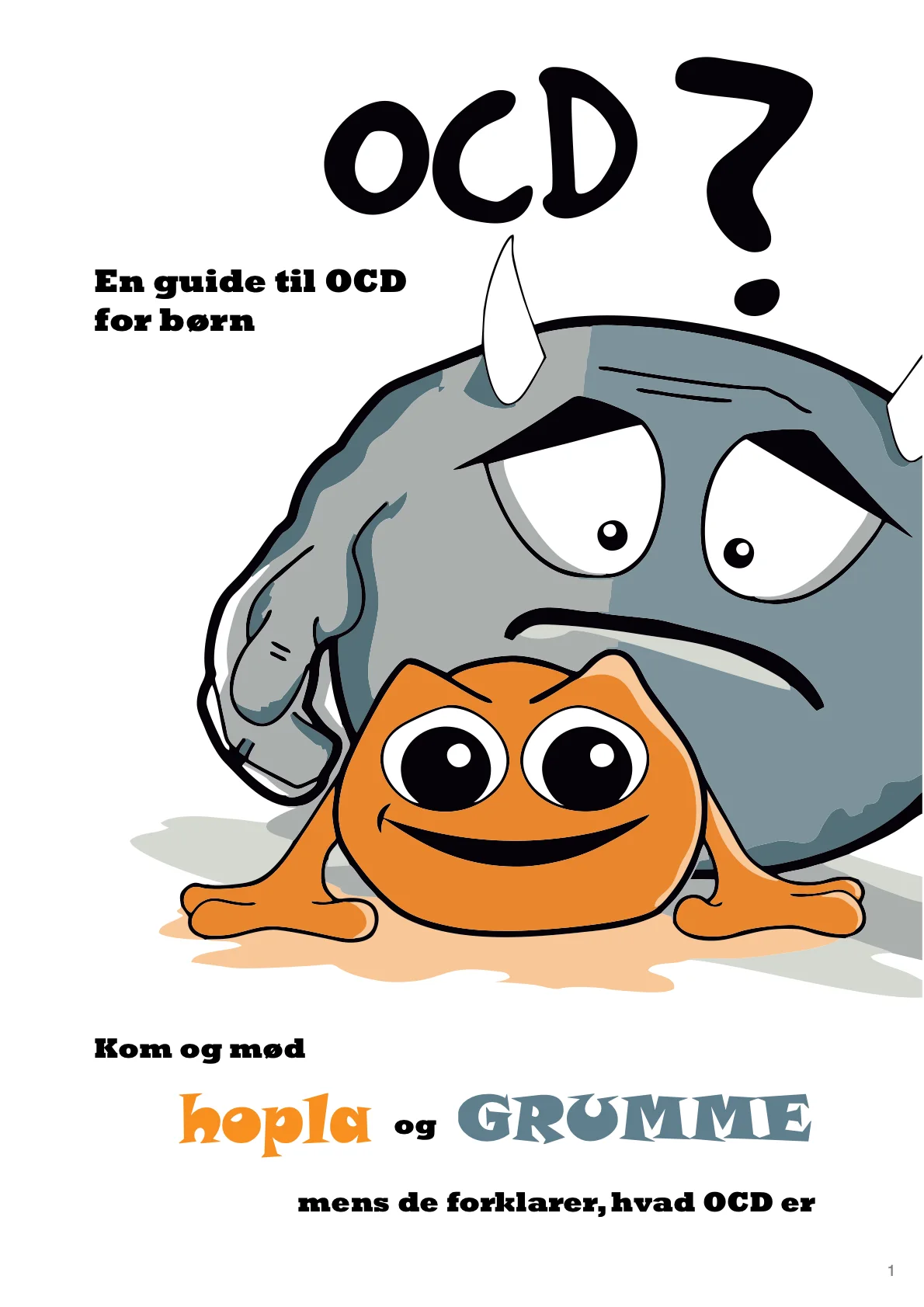
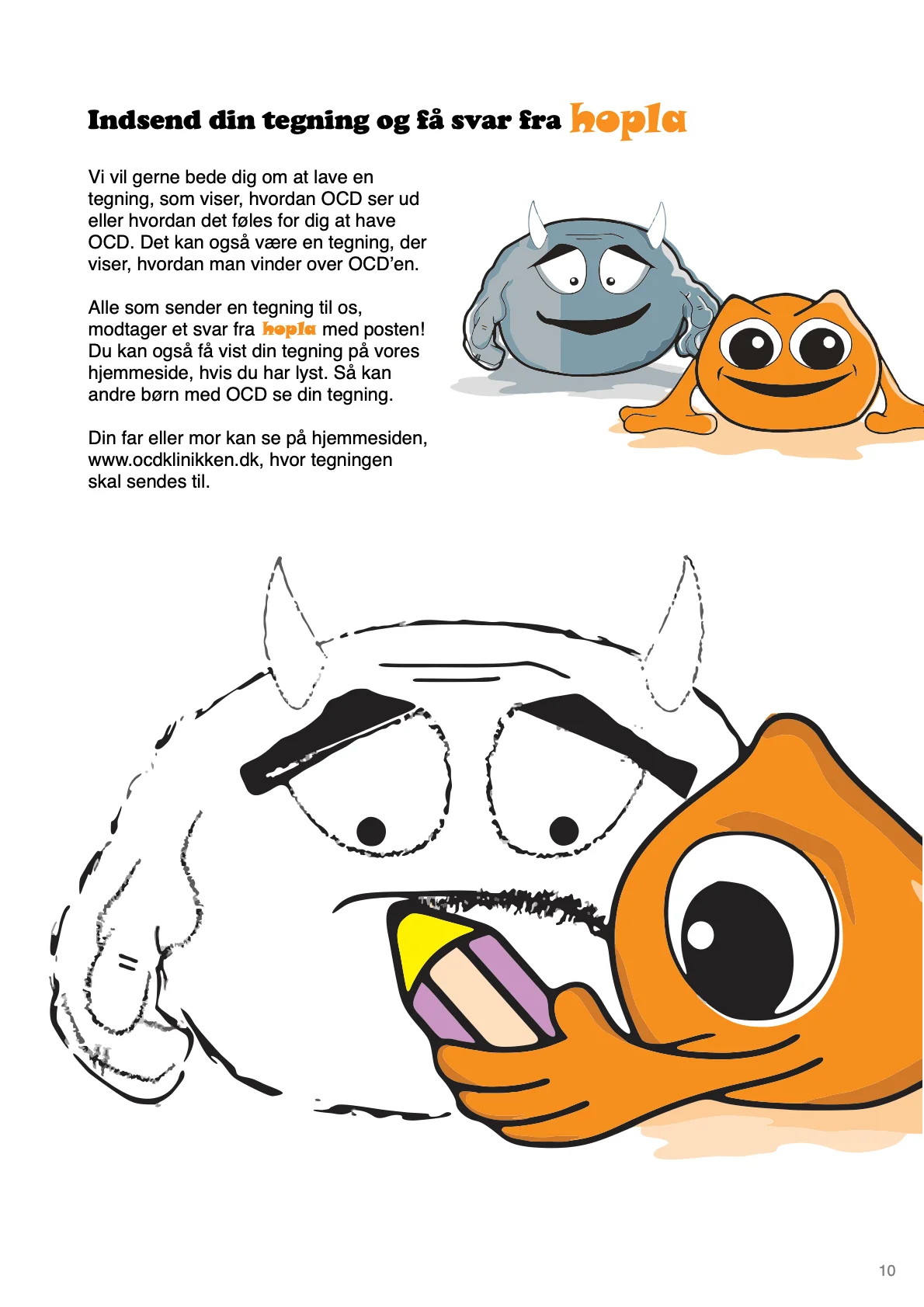
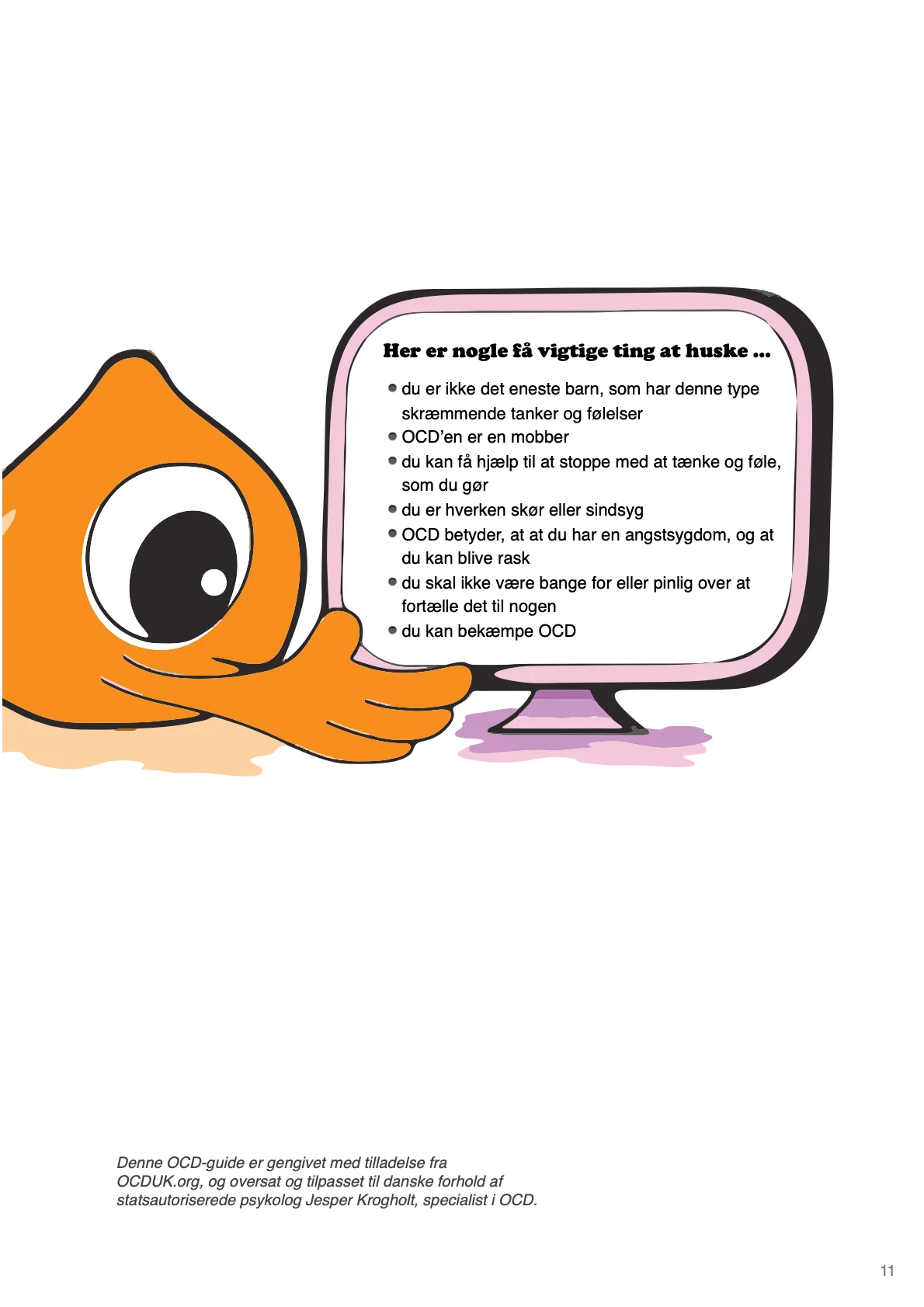
This 11-page guide gives parents and other adults a practical starting point for talking with a child about OCD. Through Hopla and Grumme, it provides a shared, child-friendly language for thoughts, feelings and ways of responding to OCD.
The guide is free to use for families, clinicians, schools and other institutions. The PDF itself is currently available only in Danish.
Hopla and Grumme help explain OCD in language that children and adults can use together. The guide is designed for children who may benefit from a more concrete and less frightening way of understanding OCD.
It offers a shared starting point for conversations at home, during treatment or at school and in other educational settings.
Parents and other adults close to the child can use the guide to talk about OCD in a calm, concrete way.
Clinicians, schools, local authority services and other institutions can also use it as an accessible introduction to OCD in children.
The Danish edition was translated from English and adapted for use in Denmark by authorised clinical psychologist and OCD specialist Jesper Krogholt, with permission from OCD-UK.
OCD guide for children · Danish edition
Preview of the Danish guide
Page 1 of 11
The guide is most helpful when a child and an adult explore it together—reading, looking at the illustrations and talking about what they notice. This can make OCD feel less abstract and give them a shared language for thoughts, feelings and ways of responding to OCD.
Learn how OCD may present in children and young people and how families can support them.
Explore common OCD symptoms, less visible patterns and possible signs of OCD.
A concise Danish-language introduction to OCD for young people, adults, family members and professionals.